RAF stretch programme: pioneering the C-130K Mk3 Hercules

Between 1979 and 1985, a joint programme involving Marshall Aerospace and Lockheed transformed 30 Royal Air Force C-130K Hercules transports into the longer C.Mk3 configuration.

With a prototype completed by Lockheed in the United States, Marshall converted the remaining 29 aircraft at Cambridge, adding 15 feet to each fuselage while retaining the systems and handling qualities essential for military operations.

The result was a substantial increase in airlift capacity without the cost or disruption of acquiring an entirely new fleet.

Giving the RAF more room to operate

By the late 1970s, the RAF’s C-130K Hercules had become indispensable for transporting personnel, vehicles and supplies. Its biggest limitation was often space rather than weight: bulky loads could fill the hold before an aircraft approached its maximum permitted payload. The RAF needed more usable room, but buying an additional fleet would be costly and would introduce new support demands.

Lockheed had already developed stretched versions of the civilian L-100 Hercules, but no military Hercules had yet been converted to this configuration. In 1978, the Ministry of Defence decided to lengthen 30 existing C.Mk1 aircraft to create the C.Mk3. The requirement was more than a larger cargo hold: the modified transports also had to preserve their military cargo-handling and paratroop capabilities, familiar aircraft systems and airworthiness.

Marshall was an established partner for the RAF Hercules, acting as the fleet’s Engineering Technical Centre and supporting its configuration as design authority. Its long relationship with Lockheed, together with its structural, maintenance and flight-test capabilities, placed it in a strong position to take the American manufacturer’s proven civilian extension concept into RAF service.

The initial military conversion was carried out at Lockheed’s Marietta plant in Georgia, with Marshall engineers observing and participating in the work. The prototype, XV223, flew in December 1979 and returned to the UK later that month. Experience gained on this first aircraft provided a practical foundation for the remaining conversions at Cambridge.


Building a larger fleet without new aircraft

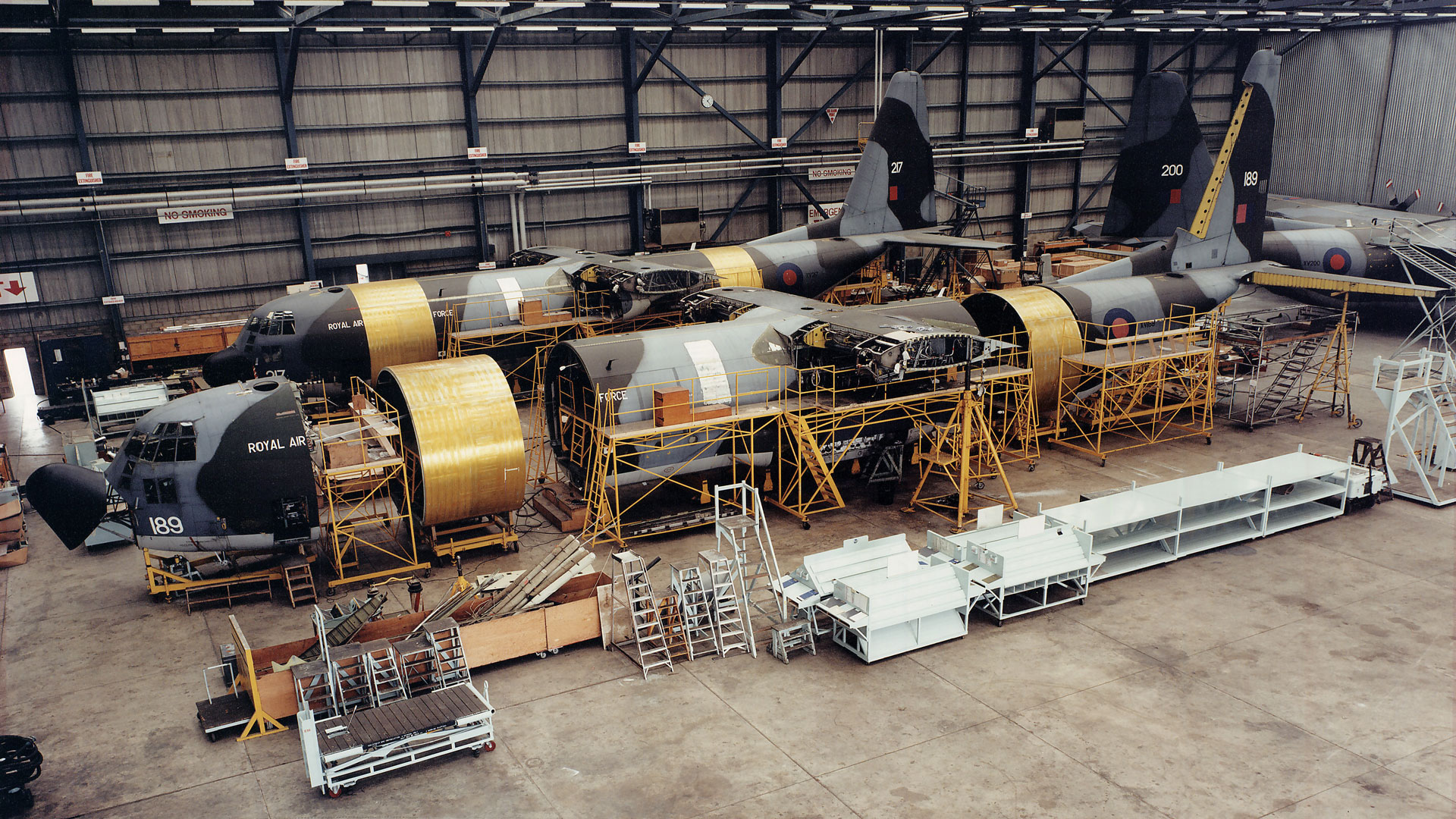
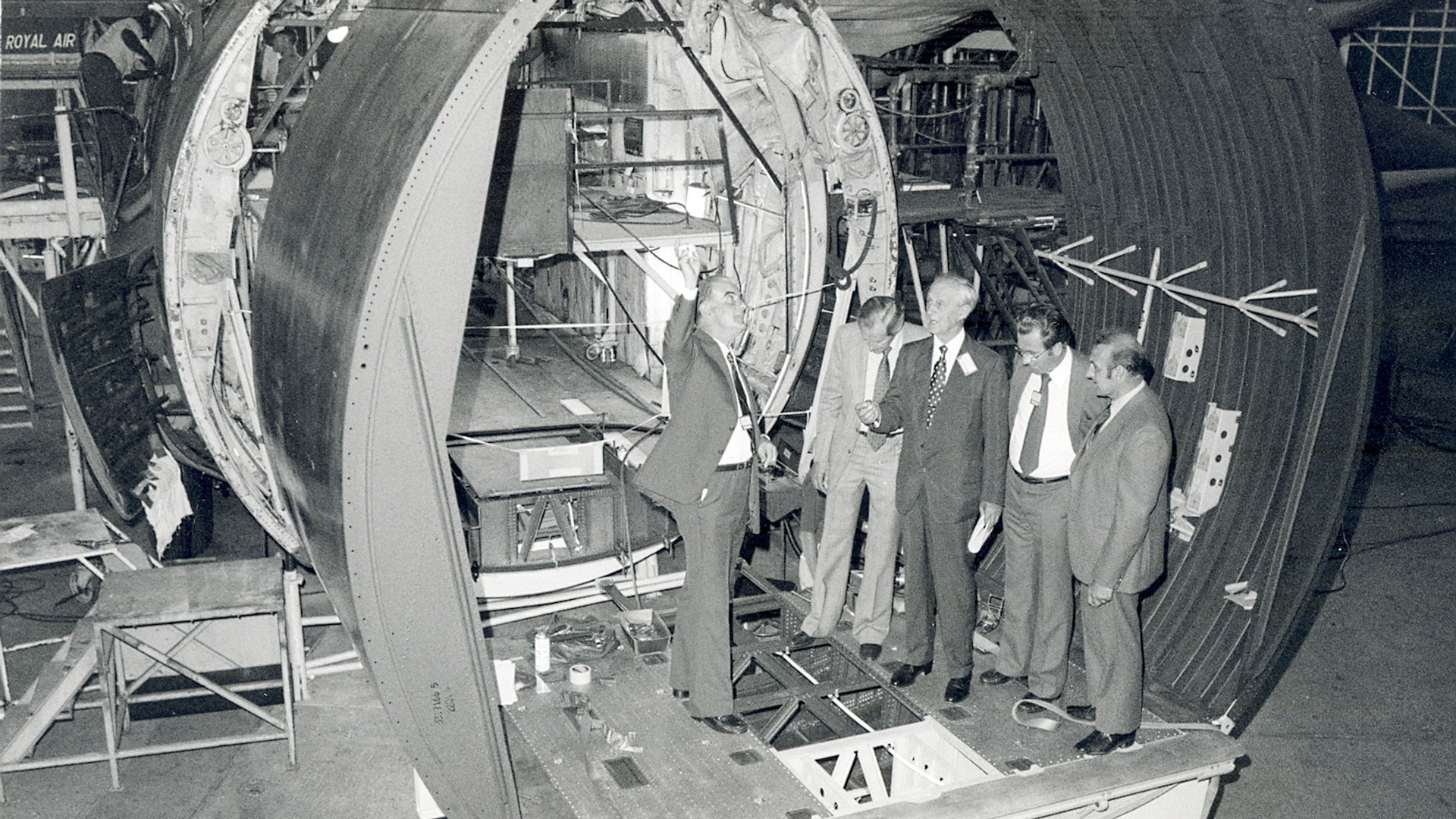
Marshall organised the Cambridge work as a repeatable, production-scale engineering operation. Each C.Mk1 was stripped of its wings and engines before the fuselage was separated at two structural joints.

The three original fuselage sections were then joined to two Lockheed-supplied inserts: a 100-inch section forward of the wing and an 80-inch section aft of it. The result was a fuselage 15 feet longer, but the visible extension was only one part of the task.

The aircraft’s load-bearing structure also required careful modification. Two upper fuselage longerons were replaced with heavier-gauge components, while adjacent lower structure was adapted to maintain the correct fuselage section. Interior soundproofing and fittings were removed, and control runs, electrical cables, hydraulic and oxygen pipes, air ducts and other services had to be extended and reconnected. Floors, internal equipment and external finishes were then reinstated before inspection and flight testing.

The real challenge was not simply joining the sections: it was returning a heavily modified aircraft to the RAF as a fully functioning, dependable transport. Delivering the work also required close coordination with the RAF and Ministry of Defence. Aircraft were scheduled for conversion alongside major inspections, outer-wing refurbishment and repainting, so the programme had to accommodate the needs of an operational fleet. Marshall initially worked on two aircraft concurrently; later the pace was adjusted as RAF availability and spending priorities changed. Conversion times fell as experience accumulated, but maintaining the agreed delivery sequence remained essential.

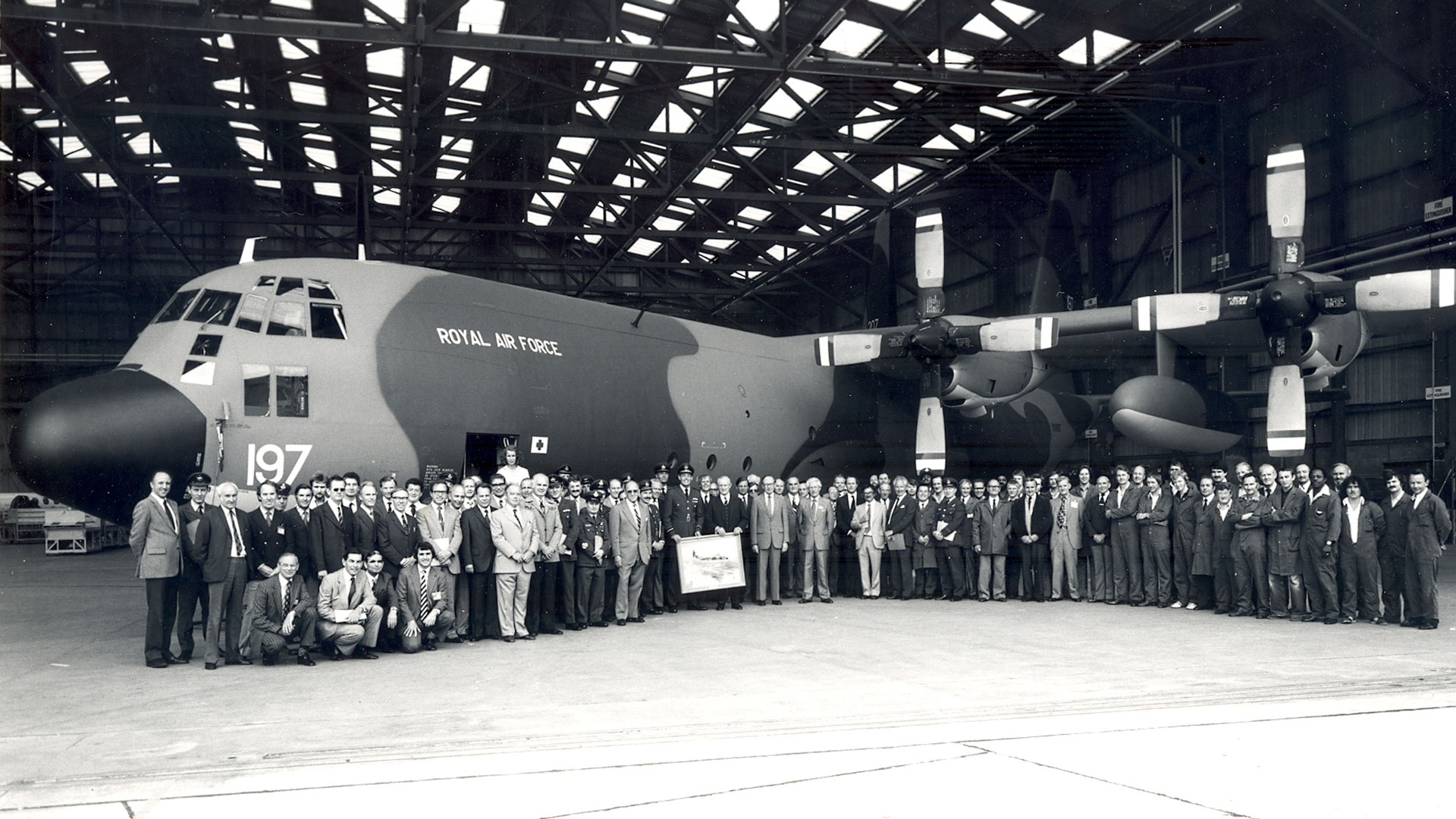
On 28 August 1980, Marshall formally handed over its first production C.Mk3, XV197, at Cambridge. By late 1982, the company had reached its 20th conversion, with the extended Hercules attracting attention beyond the RAF. Throughout the programme, the C.Mk3 retained the established aircraft engines and principal systems, helping preserve crew familiarity and existing support arrangements.
Key timeline

1978 -- Ministry of Defence selects 30 RAF C.Mk1 Hercules for conversion to C.Mk3.

Dec 1979 -- Lockheed’s prototype XV223 flies at Marietta and returns to the UK.

28 Aug 1980 -- Marshall hands over its first production conversion, XV197.

Late 1982 -- The 20th Marshall conversion is recorded at Cambridge.

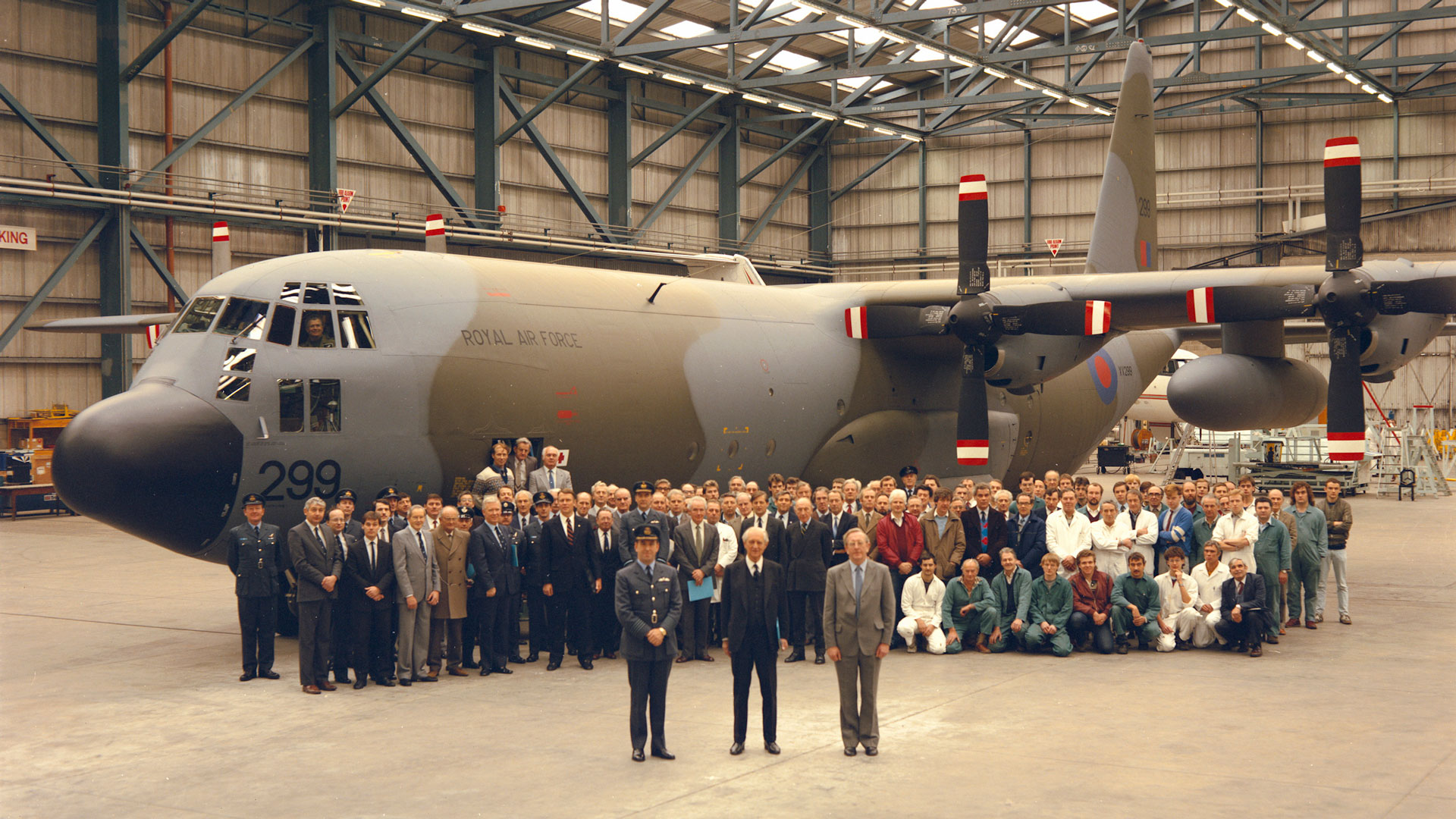
25 Nov 1985 -- XV299, the final aircraft, is formally handed over, completing all 30 conversions.

By the closing stages, stretching an aircraft had become part of a wider, carefully managed RAF maintenance and modernisation cycle. Marshall’s engineers, production teams and flight-test personnel worked with Lockheed and customer representatives to return each rebuilt Hercules to operational service, rather than treating the conversion as an isolated structural modification.


Paving the way for a new generation of C-130

On 25 November 1985, the final stretched Hercules, XV299, was handed over at Cambridge to representatives of the Ministry of Defence and RAF.

It was the 30th C.Mk3: one prototype modified by Lockheed and 29 further aircraft converted by Marshall. Group Captain David Edwards of RAF Lyneham commended the efficiency and punctuality of the programme.

The stretch programme for the RAF Hercules has been remarkable for the efficient manner in which it has been conducted.

With 30 aircraft stretched to the Mk.3 configuration, compared to the cost of buying additional new aircraft, we have enhanced considerably our airlift capacity for a relatively small outlay. There is no reason to doubt that the Mk.3 will give us years of useful service.

Group Captain David Edwards

Royal Air Force

The extra 15 feet made a substantial operational difference. The modification increased cargo-compartment volume by around 37%. The C.Mk3 could carry 128 troops rather than 92, while its capacity for equipped paratroopers rose from 64 to 92. Its longer hold also accommodated more vehicles and trailers, giving the RAF greater flexibility in how it combined people, equipment and supplies on a single sortie.

Crucially, the RAF achieved this increase in carrying capacity without purchasing 30 new aircraft. It retained a familiar platform, established support infrastructure and much of the original aircraft equipment, while gaining the additional space needed for demanding transport tasks. The modified Hercules went on to serve in military and humanitarian operations for decades.

The result was also recognised by Marshall’s partners. In a message read at the final handover, Bob Ormsby, Group President of Lockheed Aeronautical Systems, expressed the manufacturer’s confidence in the quality of Marshall’s work.

Even though such modification work is not ours, the airplane is known as a Lockheed product and our reputation is involved. We have never been concerned about this when Marshall has performed the work.

This programme is but another example that our confidence was well placed.

Bob Ormsby

Group President, Lockheed Aeronautical Systems

The Ministry of Defence likewise singled out the programme’s workmanship and delivery performance. The C.Mk3 programme demonstrated an approach that continues to underpin Marshall’s work on the Hercules: the ability to dismantle and rebuild major aircraft structures, integrate complex systems, verify the resulting aircraft and sustain the customer relationship across a multi-year programme.

It was a significant chapter in the development of the RAF’s C-130 fleet—and in Marshall’s contribution to the platform’s enduring usefulness. The programme helped establish the 15-foot stretched Hercules as a proven military workhorse. That configuration has since become an enduring part of the Hercules story, carried forward into the modern C-130J-30, which is now offered as a standard production variant.


Related content